
Serbia has become a popular destination for travelers from all over the world. In recent years, the country has welcomed more visitors from Europe, Russia, the Middle East, Asia, and neighboring countries, and with that, tipping habits have started to change.
Not long ago, most tips were left in cash. Today, more and more tourists pay by card or smartphone, which creates a new challenge for restaurants, cafés, hotels, and other hospitality businesses.
Is tipping common in Serbia?
Yes – but it’s a little different from what you might be used to in countries like the United States.
In Serbia, tipping is seen as a way to say “thank you” for good service rather than something you’re expected to do. If the service is great, people usually leave around 10% of the bill. In cafés, it’s common to simply round up the total by 50 - 100 RSD, while taxi passengers often round up the fare to a convenient amount.
Service charges are rarely included in the bill, so whether to leave a tip is entirely up to the customer.
Locals know the custom, while tourists often rely on travel guides or simply follow the tipping habits they’re used to back home.
How do tourists usually pay?
Over the past few years, cashless payments have become the norm across Serbia, especially in larger cities.
In Belgrade, Novi Sad, Niš, and other popular tourist destinations, Visa and Mastercard are accepted almost everywhere. Apple Pay and Google Pay are widely available as well. Cash is still useful in small family-run businesses, rural areas, and local markets, but overall, people are using it less than ever.
For travelers, that’s a big advantage:
no need to exchange large amounts of cash;
easy payments with a phone or smartwatch;
- fewer ATM withdrawals and currency exchange fees.
But that’s exactly where tipping becomes a problem.
Why are businesses missing out on tips?
Here’s a situation that happens every day.
A guest pays for dinner with a credit card. The payment terminal doesn’t offer an option to add a tip. The customer isn’t carrying cash, so they simply thank the waiter and leave.
The restaurant loses the tip – not because the guest didn’t want to leave one, but because there wasn’t an easy way to do it.
This isn’t just a Serbian issue. Across Europe, the shift toward cashless payments has changed customer behavior. Research shows that people are more likely to make additional purchases or payments when the process is quick and friction-free.
How do tourists from different countries tip?
Of course, every traveler is different, but there are some noticeable trends.
Visitors from the United States and Canada are generally used to tipping generously and often expect to be able to add a tip when paying by card.
Many European tourists leave around 5 - 10% or simply round up the bill.
Travelers from Russia and other CIS countries usually base their decision on the quality of the service. They’re often happy to leave a tip, but if they don’t have cash and there’s no digital option, they may skip it altogether.
Restaurant staff often mention that the lack of a convenient payment option is one of the main reasons tips are missed. At the same time, locals agree that tipping is appreciated – but never required.
Digital tipping is becoming the new standard
As tourists carry less cash, restaurants, hotels, cafés, and bars are looking for easier ways to accept tips.
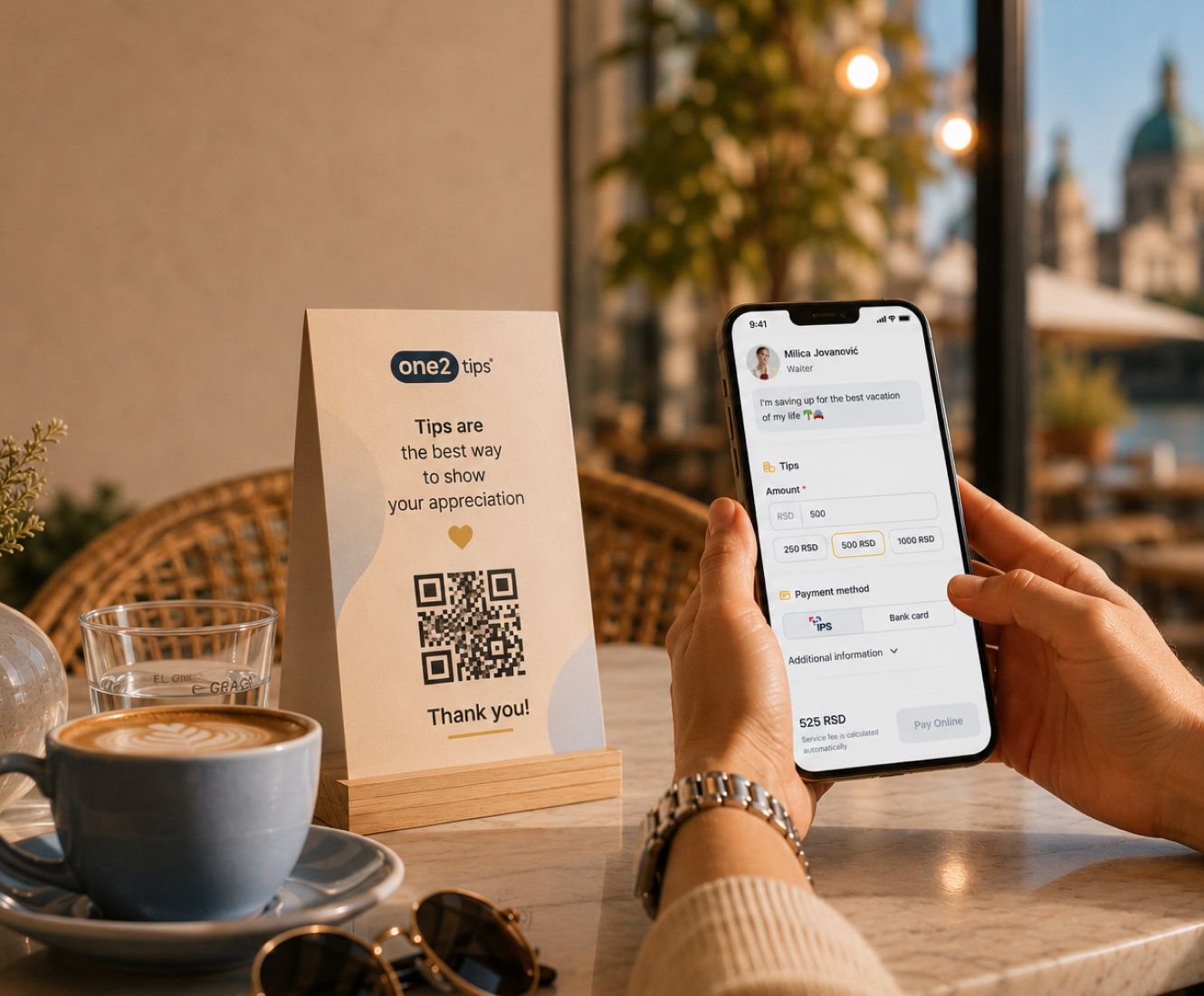
One of the simplest solutions is tipping with a QR code.
The process takes less than a minute:
the employee displays a personal QR code;
the guest scans it with their phone;
a secure payment page opens;
- the guest chooses the amount and pays using their preferred method.
In Serbia, it’s important that both locals and international visitors can use the payment method they’re most comfortable with. That’s why modern digital tipping platforms support bank cards, Apple Pay, Google Pay, and IPS – Serbia’s national instant payment network.
The transfer takes just a few seconds, and the money is sent almost immediately.
For customers, the experience is effortless. There’s no need to search for an ATM, carry small bills, or ask the waiter to add a tip to the receipt.
Why this matters for tourism businesses
Hotels, restaurants, cafés, bars, beauty salons, and tour operators all serve travelers who increasingly rely on cashless payments.
If there’s no easy way to leave a tip, employees can miss out on extra income every single day.
Digital tipping helps businesses:
accept tips even from guests who don’t carry cash;
make tipping simple for international visitors;
motivate employees;
- track tips and performance with transparent analytics.
The benefits are especially noticeable in businesses where a large share of customers are tourists.
What does this mean for businesses?
Tipping in Serbia is still voluntary, but the way people pay has changed dramatically.
Cashless payments have become part of everyday life, and customers now expect tipping to be just as easy. If they can leave a tip in a few seconds from their phone, they’re much more likely to do it.
For hospitality businesses, digital tipping isn’t just another feature – it’s a practical way to help employees earn more while giving customers the convenience they already expect.